01 — Problem
The right tool, in the wrong place
Productivity apps are often overloaded with features, onboarding flows, and notifications. Many users need a lightweight focus tool — but the friction of downloading, registering, and configuring a new app kills the habit before it starts.
The question: can a Telegram-native Pomodoro app, with a convenient built-in payment flow, achieve high user engagement and retention — by meeting users where they already are?
02 — Goals
Product, business & content
Product goals
- Simplify focus session onboarding
- Reduce friction between intent and action
- Create a lightweight, sustainable habit loop
- Test a mobile-native productivity flow
Business goals
- Validate Telegram Stars as a monetization channel
- Test freemium mechanics and upgrade triggers
- Encourage repeat usage through analytics and customization
Content / SEO goals
- Target productivity-focused organic traffic
- Build SEO landing around Pomodoro and focus keywords
- Optimize landing structure for conversion
03 — Research
Audience & competitors
Target audience segments
Competitors reviewed
Key observations
- Many apps feel overloaded before the first session even starts
- Too many settings required upfront
- Weak mobile UX and poor instant activation
- Cluttered dashboards that distract instead of focus
Hypothesis
Users may prefer a productivity tool that starts immediately and minimizes interface complexity. Telegram-native tools may improve session activation because users already spend significant time inside the messenger ecosystem.
04 — Positioning
One line. No compromises.
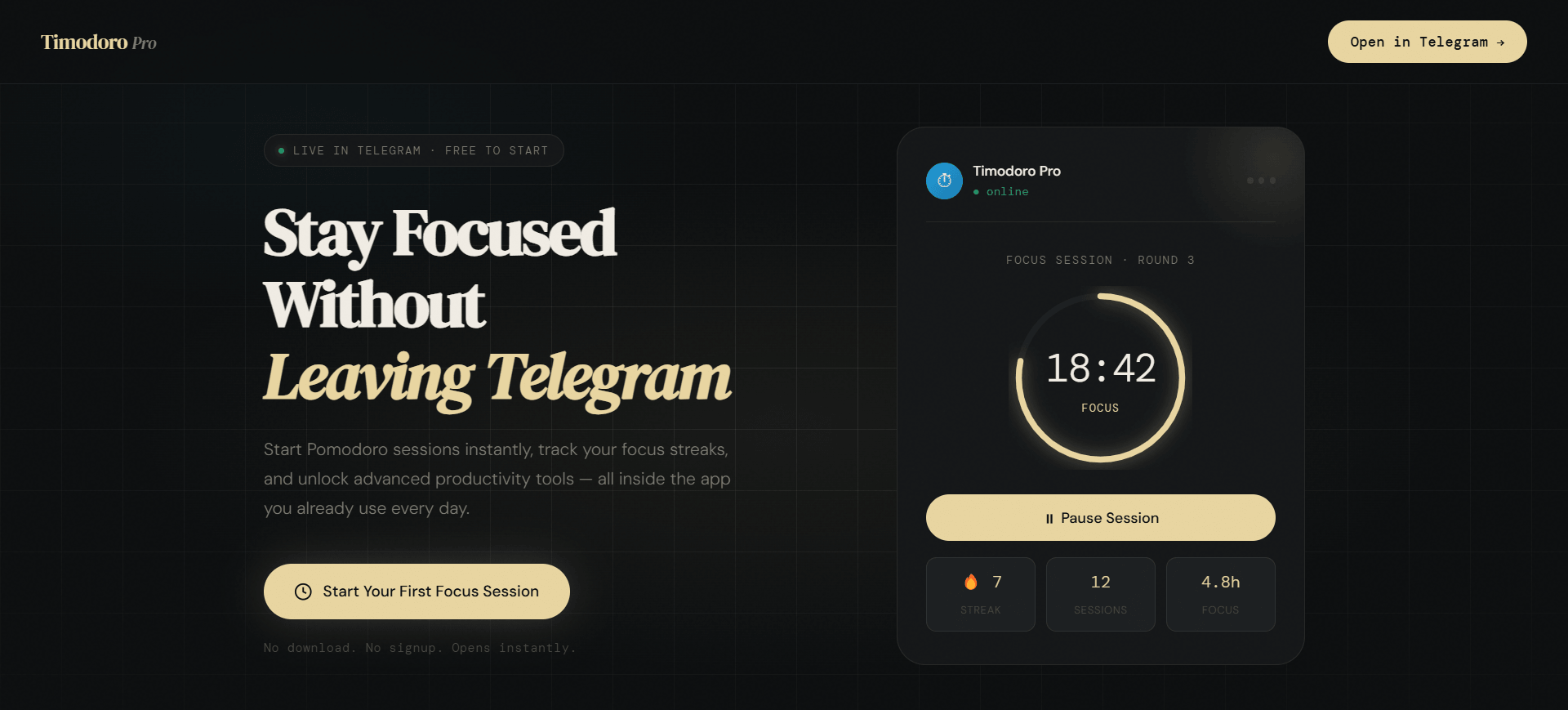
A lightweight Pomodoro timer built for fast focus sessions — directly inside Telegram.
- No installation friction
- Instant session start
- Mobile-first UX
- Lightweight focus tracking
- Simple, native monetization
05 — Landing Structure
Architecture built to convert
06 — Copy Decisions
Clarity over features
Tier-1 style: show clarity, UX thinking, and conversion intent in every line.
| Instead of | Better |
|---|---|
| Advanced productivity management platform | Focus on one task at a time |
| AI-enhanced productivity experience | Start a focus session in one tap |
UX logic behind the decisions
- Why Telegram: users already spend time there; lower onboarding friction; mobile-native behavior; built-in payments
- Why minimal UI: the interface intentionally minimizes secondary actions to keep the user focused on starting the session quickly
- Why statistics are partially Pro: creates upgrade motivation, supports retention, increases perceived value
07 — Monetization
Freemium with a clear upgrade path
Habit & retention loop
- Trigger: open Telegram
- Action: start session
- Reward: streak / statistics
Why Telegram Stars
- Low-friction upgrade flow — no external payment screen
- Mobile-first purchases, native to the ecosystem
- Fast conversion mechanics aligned with impulse upgrade moments
08 — SEO Strategy
Keyword architecture & structure
| Keyword | Intent |
|---|---|
| pomodoro timer online | Transactional |
| focus timer app | Commercial |
| productivity timer | Mixed |
| telegram productivity app | Niche |
SEO structure principles
- Landing optimized around productivity intent keywords
- FAQ section targeting long-tail queries
- Benefit-driven headings over feature lists
- Lightweight content architecture for fast load
Content strategy beyond landing
- Productivity use case articles
- Focus habit guides
- Comparison pages vs. direct competitors
- ADHD / productivity intent content cluster
09 — A/B Hypotheses
What we're testing
10 — Reflection
What this project taught me
Activation speed is everything. Users are more likely to engage when the first action requires minimal effort. Every extra step before the first session is a potential drop-off point.
Simplicity outperforms features. Clear, benefit-driven UX messaging consistently performed better than feature-heavy positioning — both in copy and in product structure.
Platform-native beats platform-agnostic. Building inside Telegram's ecosystem, rather than alongside it, removes the biggest friction: context-switching.